

The Invisible Cost Nobody Sees: How Electricity Quietly Eats Into Business Profit
Two businesses open on the same street.
They sell similar products. They attract similar customers. They appear to be doing equally well.
But behind one shop's doors, money is disappearing in ways that never appear on a receipt.
No thief breaks in. Nobody steals from the cash register. No employee is caught doing anything wrong.
Yet, month after month, the cost of keeping the business running quietly eats into its profit.
The culprit may be something the business owner has become so used to that they no longer see it as a problem.**
Electricity.
Not just the electricity bill. Not just the money spent buying petrol. The full cost of keeping the lights on, the equipment running and the business open.
And that is where things get interesting.
The Expense That Has Become Normal
In Nigeria, many business owners have learned to plan around unreliable electricity.
A shop owner buys fuel before opening. A barber switches on a generator when the power goes off. A restaurant has to keep its refrigerators running. A small office needs electricity for computers, internet equipment and lighting.
Over time, these decisions become routine.
Buy fuel. Start the generator. Pay for servicing. Replace a faulty part. Repeat.
Because these expenses happen frequently, they can start to feel like an unavoidable part of doing business.
But here is the question: **Have you calculated how much it actually costs your business to access reliable electricity?**
Many people know how much petrol they bought yesterday. Fewer have a clear picture of their total monthly energy expenditure, including fuel, maintenance, electricity bills and the financial impact of interruptions.
That missing calculation can hide an important business problem.
The Money You Spend Is Not the Whole Story
Imagine a small business that spends money on grid electricity and also runs a generator whenever the supply is unavailable.
At first glance, the costs seem simple: there is the electricity bill and the fuel bill.
But the complete picture may include:
- Fuel: The petrol or diesel needed to keep the generator running.
- Maintenance: Oil changes, servicing, repairs and replacement parts.
- Equipment costs: The purchase price of the generator and the cost of replacing it over time.
- Interrupted work: Time lost when electricity fails and backup power is unavailable or insufficient.
- Business disruption: Spoiled stock, delayed orders or customers who cannot be served during an outage.
- Noise and exhaust: The practical disadvantages of running a combustion generator near workers, customers or living spaces.
Not every business experiences all these costs, and their financial impact varies. However, ignoring them can make an energy arrangement appear cheaper than it really is.
A 2022 study published in *Energy for Sustainable Development* examined generator use in urban Lagos. Using data from 100 generator users, the researchers estimated that generator-produced electricity cost substantially more per unit of energy than grid electricity in their study.
Those figures reflect the study's data and historical conditions, not today's prices for every Nigerian business. The broader lesson remains worth considering: **the price of fuel alone does not tell you the full cost of the electricity you generate.**
Source: [Economic costs and environmental impacts of fossil fuel dependency in sub-Saharan Africa: A Nigerian dilemma](https://www.sciencedirect.com/science/article/pii/S0973082622001053).
The Silent Profit Killer: Not Knowing Your Numbers
Here is where the mystery becomes a business lesson.
A business owner might carefully calculate the cost of stock, rent, staff salaries and transportation but treat electricity as a collection of separate expenses.
Fuel is recorded here. Repairs are recorded there. Electricity payments appear somewhere else.
Without bringing these costs together, it can be difficult to see how much power really costs the business.
Consider a simple example.
A business spends ₦5,000 on fuel on a working day. If it operates for 26 days, that is ₦130,000 in fuel for the month.
That calculation is only an illustration—not an estimate of what every business spends. It also excludes servicing, generator purchase costs, grid electricity and other energy expenses.
But even this one line item raises an important question: what else could the business do with that money if it could reduce its energy costs without affecting operations?
Could it restock faster? Improve its equipment? Save toward expansion? Build an emergency fund?
The point is not that every naira spent on energy is wasted. Electricity enables businesses to operate. The real issue is whether the business is getting the best practical value from what it spends.
Could Solar Energy Change the Calculation?
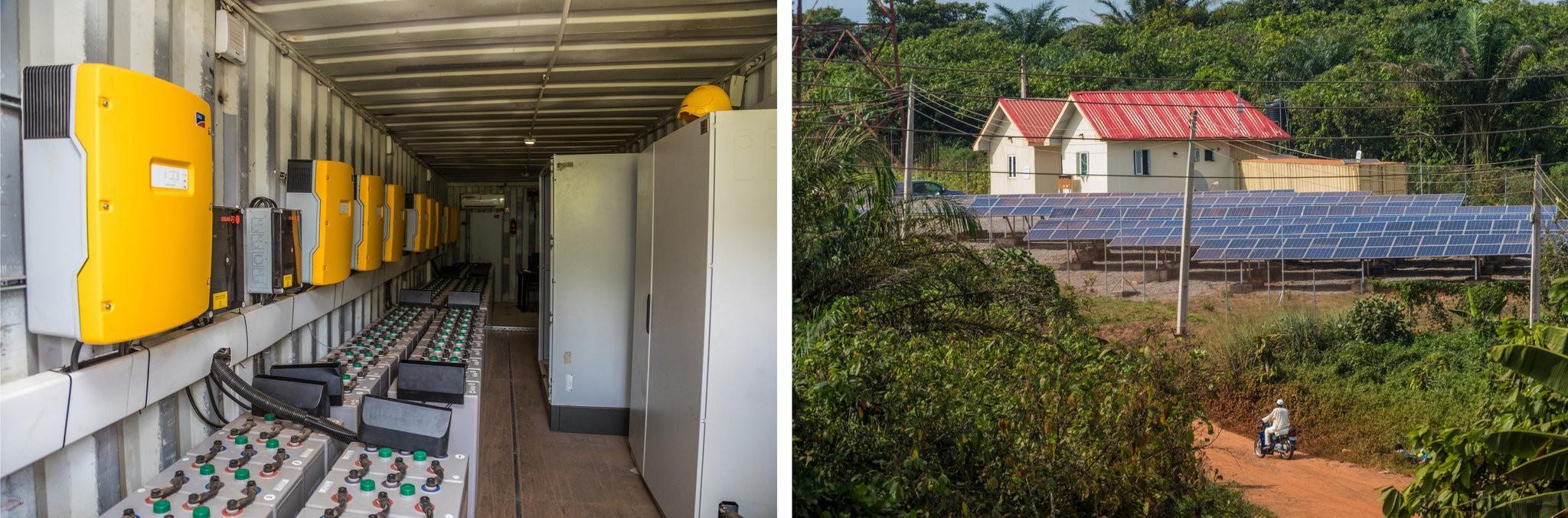
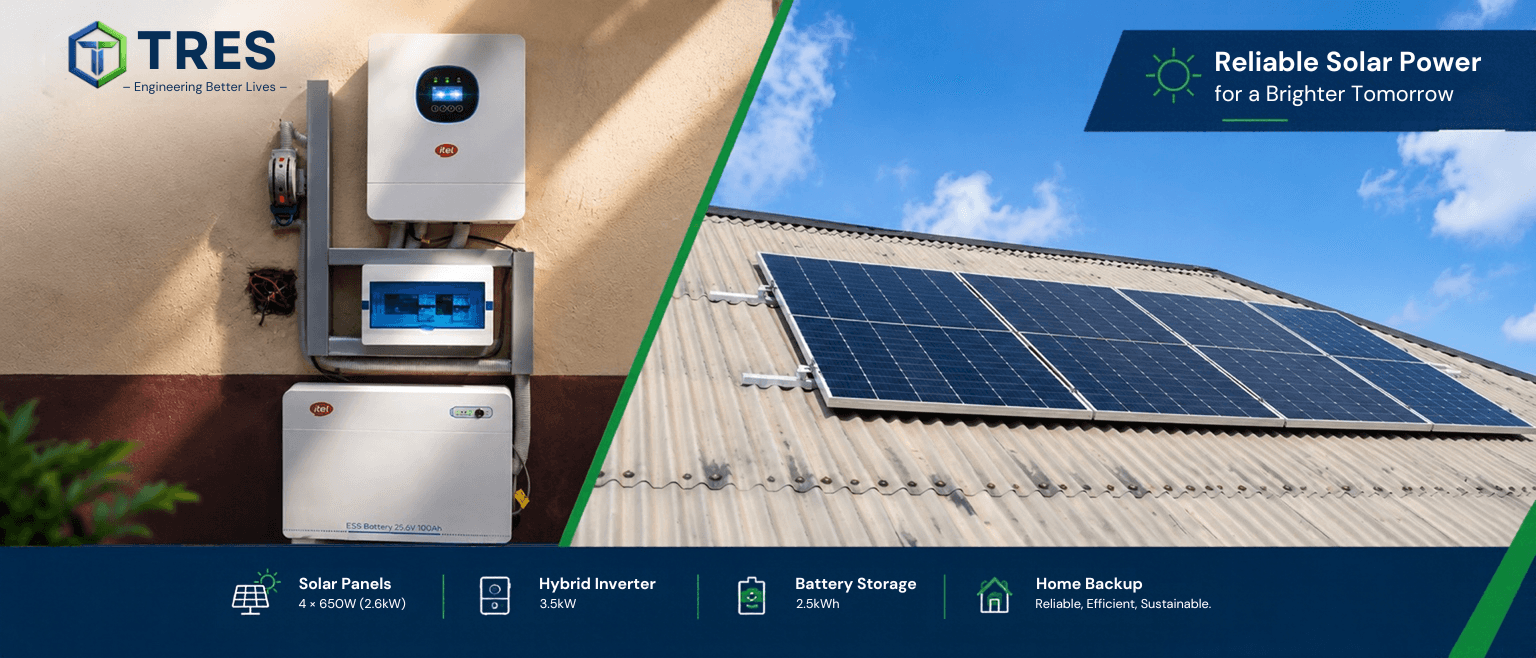
For some homes and businesses, solar energy with battery storage may provide an alternative to depending heavily on a fuel-powered generator.
Solar panels generate electricity from sunlight. An inverter converts electrical power into the form needed by compatible appliances, while a battery can store energy for use when solar production is insufficient.
A properly designed system can reduce generator operating hours and fuel consumption. Depending on the user's needs, local conditions and the system's cost, it may also improve the predictability of energy expenses.
But there is an important detail that advertisements sometimes overlook.
Solar is not automatically cheaper for every business, and it does not automatically provide unlimited electricity.
A system that is too small may struggle to run the required appliances. An undersized battery may not provide the desired backup time. Poor installation, shading, unsuitable equipment or unrealistic expectations can also undermine performance.
Solar equipment has an upfront cost, and batteries and other components may eventually need replacement. A sensible comparison must consider these costs alongside the fuel, maintenance and electricity expenses that the alternative system could reduce.
The right question is not simply, "How much does a solar system cost?"
It is: "What will this system cost to own and operate, what can it reliably power, and how does that compare with my current energy arrangement?"
That is a much better starting point for making a business decision.
The Biggest Mistake Is Buying Before Understanding the Problem
Imagine asking for a solar system because you want to stop spending so much on fuel.
Before recommending equipment, a competent installer should want to understand how the business operates.
Which appliances need to run? What are their power ratings? How many hours are they used? Which loads are essential? Is the business operating mainly during daylight or at night? How long must the battery support the load when solar generation is unavailable?
These questions matter because two businesses can have very different energy needs even if they occupy similar buildings.
A small office running laptops, lights and internet equipment is not the same as a restaurant with refrigeration or a workshop using heavy machinery.
The goal should be to design around actual consumption, not simply choose the biggest inverter a budget can buy.
A good energy assessment should help clarify:
- The appliances and equipment that must run.
- Their combined power demand and starting surges where relevant.
- The expected hours of use and required backup duration.
- The appropriate inverter capacity, battery storage and solar-panel size.
- The installation, protection and maintenance requirements.
- The likely costs and limitations of the proposed solution.
This process will not eliminate every uncertainty, but it can reduce the risk of investing in equipment that does not meet the business's needs.
Five Questions Every Business Owner Should Ask
Before making another energy-related purchase, take a moment to ask:
1. How much do I spend on energy each month?
Include grid electricity, fuel, servicing and repairs. Where possible, review several months rather than relying on memory.
2. Which equipment consumes the most power?
Identify the appliances that use the most energy and how long they run. Sometimes, changing usage patterns or replacing inefficient equipment can reduce consumption.
3. What happens when the power goes off?
Work out whether outages cause lost sales, delayed work, damaged stock or simply inconvenience. The impact will help determine how much backup is worth paying for.
4. What would a suitable alternative actually save?
Ask for a realistic comparison that includes the upfront investment, expected running costs, maintenance and replacement considerations. Avoid relying on a savings percentage without understanding its assumptions.
5. Am I buying a product or solving a problem?
A new inverter or battery is not automatically the right answer. Better energy management, more efficient appliances, a smaller backup arrangement or a properly sized solar system may be more suitable depending on the situation.
These questions are useful whether you operate a shop, salon, restaurant, office, workshop or home-based business.
What the Research Tells Us
The cost of energy for Nigerian businesses is not merely a theoretical concern.
A March 2026 issue brief from the National Institute for Legislative and Democratic Studies examined the effects of rising energy costs on small and medium-sized enterprises. It discussed how higher fuel expenses can pressure operating costs, profitability and business continuity.
Separately, research published in the African Journal of Stability and Development examined power outages and SME performance in Ekiti State. Its findings illustrate how unreliable electricity and the expense of alternative power can affect businesses, although the results from its study sample should not be treated as representative of every business in Nigeria.
These sources point to a practical conclusion: energy decisions deserve the same attention as other important business expenses.
Sources:
- [National Institute for Legislative and Democratic Studies — Rising Energy Costs and the Survival of SMEs in Nigeria](https://ir.nilds.gov.ng/handle/123456789/3610)
- [Power Outages and the Performance of Small and Medium Scale Enterprises in Ekiti State, Nigeria](https://journals.abuad.edu.ng/ajsd/article/view/1135)
The Real Mystery Is What We Have Stopped Questioning
Perhaps the most expensive part of unreliable electricity is not a single fuel purchase or repair bill.
Perhaps it is the habit of accepting energy expenses without regularly examining them.
When a cost becomes routine, it can disappear from our attention even while it continues to affect the business.
That does not mean every business needs to install solar tomorrow. It does not mean generators have no place, or that the national grid is irrelevant. Different users need different solutions, and the numbers must make sense for each one.
It means something simpler: before you spend more money trying to keep your business powered, understand exactly what you are spending, why you are spending it and whether there is a better way.
The business that understands its energy costs is better positioned to compare its options, plan its budget and make informed decisions about future investment.
And that brings us back to the two businesses on the same street.
From outside, they may look identical. Their customers may see no difference. But the owner who understands the true cost of running the business has one advantage: better information.
Sometimes, improving profitability does not begin with selling more.
Sometimes, it begins by discovering where the money has been going all along.
At TRES Engineering, we believe better energy decisions begin with understanding real needs. From solar power and battery storage to electrical systems and energy planning, the objective is to find solutions that fit how people actually live and work.
If you are considering solar for your home or business, speak with TRES Engineering about your energy requirements and suitable system options.
Call 07033979488 or 09130703970.
TRES — Engineering Better Lives.
Join the conversation
No comments yet. Be the first to share a thought.