
Solar Generator vs Normal Solar System: Which Is Better for Your Home?
Imagine spending your hard-earned money on a solar generator, only to discover that it cannot power all the appliances you expected. Or investing in a complete solar installation when a smaller setup would have handled your everyday needs.
Both situations can be avoided if you understand what you are buying before making a decision.
Solar generators and conventional solar systems can both provide electricity when the grid is unavailable. However, they differ in capacity, installation, flexibility and the appliances they can support.
So, which one is right for your home or business in Nigeria?
Let’s break it down in simple terms.
What Is a Solar Generator?
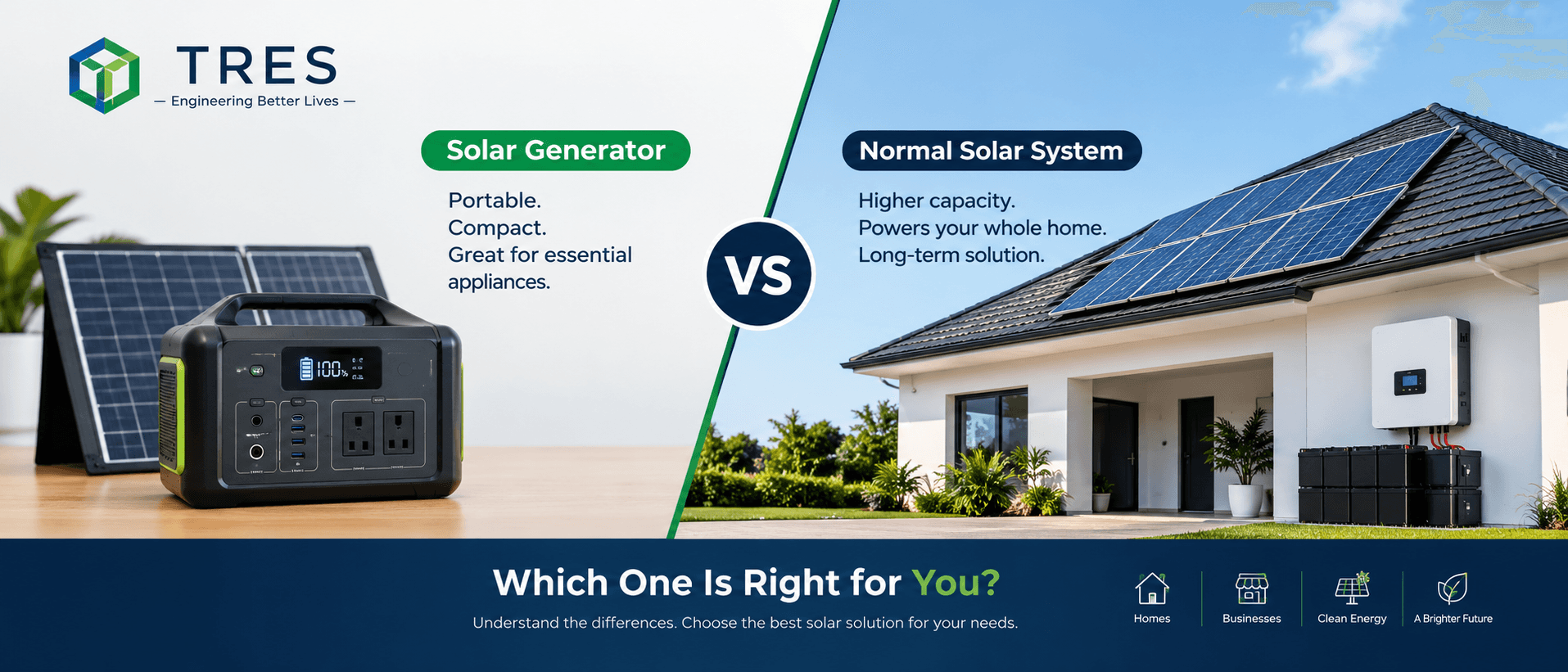
A solar generator is commonly a compact, integrated power station that stores electricity in a battery and supplies power through built-in outlets. Depending on the model, it may charge from solar panels, wall electricity or other supported sources.
Think of it as a large rechargeable power bank designed to power more than phones.
Depending on its capacity and output rating, a solar generator may power:
* Mobile phones and laptops * LED lights * Fans * Wi-Fi routers * Televisions * Selected small appliances
Some larger models can support additional appliances, but you must check their actual output rating, battery capacity and charging limits before buying.
The biggest advantage: Many solar generators are easy to set up, require little or no permanent installation and can be moved when necessary.
However, portability does not automatically mean high capacity. A small unit may not run a refrigerator, pumping machine or air conditioner for the length of time you expect.
What Is a Normal Solar System?
A conventional home solar system is a collection of components installed and connected to provide electricity for selected appliances or an entire property.
A typical installation may include:
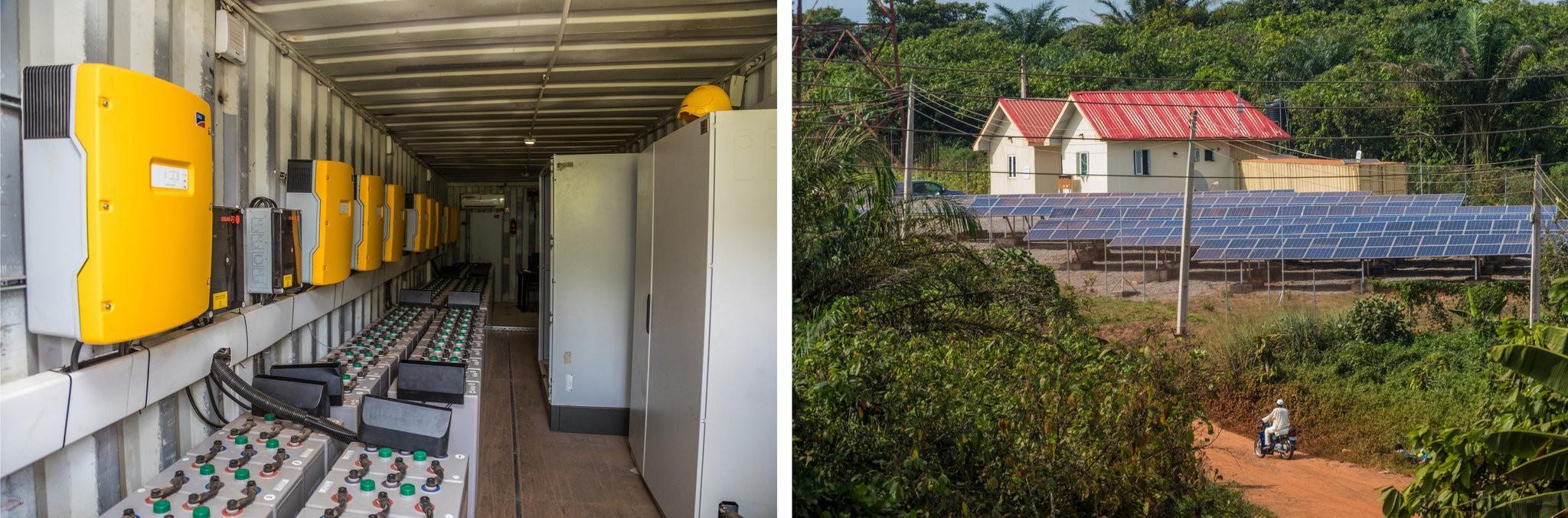
* Solar panels: Convert sunlight into electricity. * Solar inverter: Converts battery power into usable AC electricity and, depending on its design, manages solar and other power sources. * Battery storage: Stores electricity for use when solar production is low or unavailable. * Protection and wiring: Help the system operate safely when correctly selected and installed.
Some systems use a hybrid inverter that can work with solar panels, batteries and grid electricity. Others may use different configurations depending on the property and its requirements.
Unlike a compact portable power station, a conventional system can be designed around your actual household or business loads. It may support lights, fans, televisions, refrigerators, freezers and other suitable appliances when correctly sized.
The biggest advantage: You can design the system around your needs and potentially expand it later, provided the equipment supports expansion.
Solar Generator vs Normal Solar System: The Main Differences
Here is a quick comparison to help you understand the options.
Feature Solar generator Conventional solar system Installation Usually simple setup Usually requires professional installation Portability Often portable Usually fixed in one location Capacity Depends on the model; compact units may be limited Can be designed for larger loads Best suited for Essential appliances and portable backup Homes, offices and businesses needing broader coverage Expansion Limited by the model’s supported inputs and accessories May allow expansion if designed for it Initial spending Often lower for smaller units Depends on the required inverter, battery, panels and installation Heavy appliances Only if the unit can safely support the load Possible when the complete system is properly designed
Remember that these are general differences. A large power station may outperform a small home installation in some areas, so compare the actual specifications rather than relying on product names.
Which One Is Better for Your Budget?
The cheapest option is not always the one that gives you the best value.
Your decision should depend on the appliances you need, how many hours you want to use them, and how much you can comfortably invest.
Choose a solar generator if…
A solar generator may be suitable if:
* You mainly need to charge phones and laptops. * You want to power a few lights, a fan and a router. * You live in a small apartment and need a simple backup option. * You need portable power for work, travel or a small business. * You want to start with a compact solution before considering a larger installation.
For example, someone working from home who mainly needs a laptop, internet connection, lighting and a fan may find a suitably sized solar generator practical.
Choose a conventional solar system if…
A full solar installation may be more suitable if:
* You want to power several rooms. * You need to run a refrigerator or freezer. * You want more battery storage for evening and overnight use. * Your business depends on electricity throughout the day. * You want to reduce your dependence on fuel-powered generators. * You need a system designed around multiple appliances or future expansion.
For example, a family that wants to power lights, fans, a television, a refrigerator and other essential appliances may benefit more from a properly sized conventional solar system.
The right answer still depends on the combined load, battery capacity, solar production and expected operating hours.
Can a Solar Generator Power an Entire House?
Sometimes, but do not assume that every solar generator can.
The words “solar generator” can describe products with very different capacities. A compact portable power station is not equivalent to a large, professionally designed solar installation.
Before purchasing one, check three important specifications:
1. Output power in watts
This tells you how much power the unit can supply at one time.
If your appliances require more power than the unit’s rated output, it may overload or shut down. Appliances with motors and compressors can also draw additional power when starting.
2. Battery capacity in watt-hours or kilowatt-hours
This helps estimate how much energy the unit stores.
For example, a 1,000Wh battery does not necessarily provide 1,000Wh of usable AC electricity because conversion losses and battery limits must be considered.
A larger battery generally provides more stored energy, but it does not automatically mean the unit can power a high-wattage appliance.
###3. Solar charging capacity
If you plan to recharge using sunlight, check the maximum supported solar input, the permitted panel voltage and current, and the recommended panel configuration.
A unit with a large battery but limited solar input may take longer to recharge than you expect.
These three specifications should be considered together before you buy.
How Do You Choose the Right Size for a Normal Solar System?
For a conventional installation, three things matter most.
Inverter capacity
The inverter must support the appliances that may operate at the same time, including relevant starting surges.
Battery capacity
The battery determines how much energy can be stored for later use. Your required backup time and overnight consumption are important when choosing its size.
Solar panel capacity
The panels must generate enough energy to serve daytime loads and recharge the battery under the expected sunlight conditions.
A system can disappoint you when one component is too small for the job. For example, a powerful inverter paired with a small battery may run several appliances but provide limited backup time.
That is why choosing a system based on inverter size alone is not enough.
Five Mistakes to Avoid Before Buying Solar
1. Buying based on price alone
A low price means little if the unit cannot handle your essential appliances. Compare the complete specifications and what is included in the package.
2. Assuming every appliance will work
Check the rated output and starting requirements of refrigerators, freezers, pumps and air conditioners before connecting them.
###3. Confusing power with energy storage
Watts describe the rate of power delivery, while watt-hours and kilowatt-hours describe stored or consumed energy. Both matter when choosing a backup solution.
4. Forgetting how the system will recharge
Consider whether you will charge from solar panels, grid electricity or another supported source. Also consider how much energy you use each day.
5. Installing a system without proper protection
Incorrect wiring, unsuitable cables, missing protective devices and incompatible components can create serious risks. Use a qualified installer and follow the equipment manufacturer’s requirements.
Which Option Should You Choose?
There is no single answer for every home.
If your priority is portability and powering a few essential devices, a solar generator may be enough.
If your priority is powering a wider range of household or business appliances, a conventional solar system may be the better choice.
If you are unsure, start by listing the appliances you want to use, their power ratings and the number of hours you need them to operate. This provides a much better starting point than choosing equipment based on a product name or package price.
Frequently Asked Questions
Is a solar generator the same as an inverter?
No. A solar generator commonly combines a battery, inverter and charging electronics in one unit. A conventional inverter is one component of a larger power system, although some modern products integrate multiple functions.
Can I use a solar generator without solar panels?
Many models can charge from a wall socket or another supported power source. However, charging options differ by model, so check the manufacturer’s specifications.
Can a normal solar system work without a battery?
Some solar installations are designed to operate without battery storage under suitable conditions, but they may not provide backup power after sunset or during grid outages. The exact behaviour depends on the inverter and system design.
Which option is better for a small shop?
A solar generator may suit a shop running a few lights, a fan, a phone and a POS terminal. A shop with refrigerators, multiple appliances or longer operating hours may need a properly sized conventional system.
Can I start small and upgrade later?
Yes, but plan ahead. Not every inverter, battery or solar generator supports expansion. Check compatibility, available capacity and manufacturer limits before buying.
Let TRES Engineering Help You Choose the Right Solar Solution
You do not have to buy the biggest system. You need a system that fits your actual needs.
At TRES Engineering, our goal is to help homes and businesses make informed decisions about renewable energy solutions, from compact solar power options to professionally designed solar installations.
Tell us what you want to power, how long you need it to run and your preferred budget. We can help you identify the right questions to ask and the type of system to consider.
TRES — Engineering Better Lives.
Join the conversation
No comments yet. Be the first to share a thought.